Loading
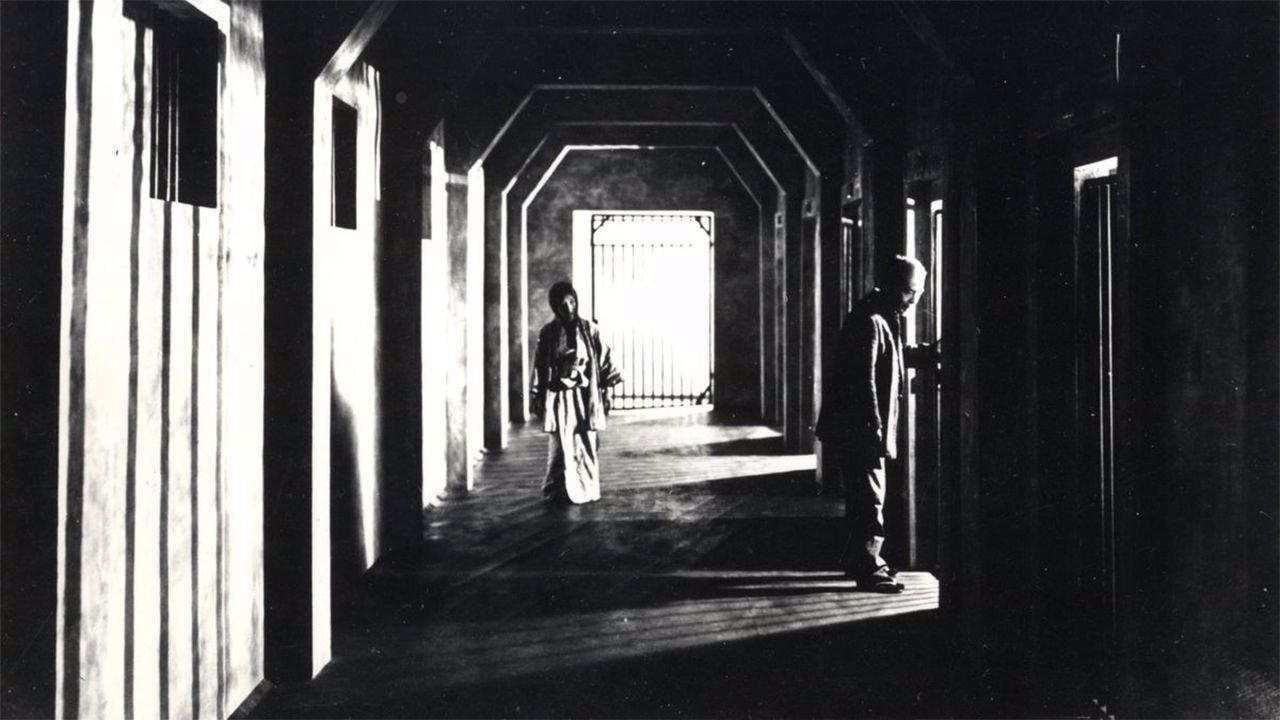
Teinosuke Kinugasa, 1926, with the Shinkankaku-ha. A man takes a janitor's job in an asylum to watch over his wife; their daughter arrives with a marriage question. Yasunari Kawabata is credited with the story; the scenario was a group job, with no intertitles, rapid cutting, dance, and painted sets. Kinema Junpo called it the first filmlike film born in Japan. Thought lost after a studio fire, it was found by Kinugasa in a rice barrel in his storehouse in 1971, about two-thirds complete, and BFI ran it on the rediscovery.
In one programme
No titles, no benshi script, a janitor in an asylum watching his wife. Rapid cutting, dance, painted sets, and a third still missing. Kinugasa found the print in a rice barrel in 1971. The Noh masks near the end are the film's own idea of a happy ending.
Cast & crew
Also streaming
Loading films