Loading
CollectionGenres and themes
The Supernatural and the Occult
Cinema reached for ghosts early because the machine could do substitutions. Méliès's 1896 castle trick is counted as the first horror film. After that the uncanny is a technique: Sjöström's double-exposed coach, Christensen lecturing you through a witches' sabbath, Murnau putting a real landscape around a figure that should not walk.
Watch shadows that do not belong to anyone. Caligari's sets are a mind. Nosferatu is a contagion. Chaney's Phantom is a ruined face under a mask. White Zombie, 1932, is often cited as the first feature about the living dead, and the horror is labor, not appetite. Vampyr sounds wrong on purpose.
Printed in fire
The programme
1. Le manoir du diable
SilentThe first trick was a bat becoming the Devil. Substitution splices, skeletons, a cauldron, a crucifix. Méliès meant a comic féerie and the histories call it the first horror film. Take both readings. Three minutes.
2. Frankenstein
SilentThe creature forms in a vat of smoke: a burning dummy run backward. Edison in sixteen minutes, one print, lost for most of a century. Ogle built the makeup himself. The ending, the creature fading in a mirror, is the film's own theory of what a monster is.
The sets are a mind. Painted shadows, streets that lean, a sleepwalker who tells you the hour of your death. Nothing in the frame is supernatural except the frame. The uncanny here is a set designer's decision, and it never needed a ghost.
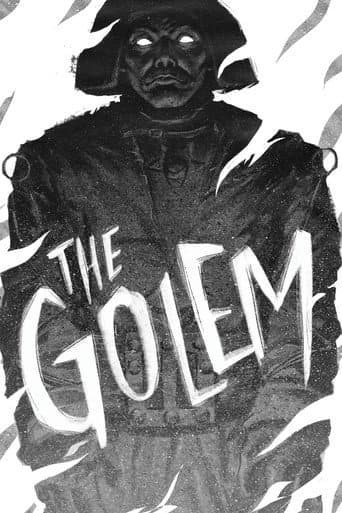
A creature made of clay and a ghetto built to look grown. Poelzig's walls lean and bulge; Wegener stands very still. The word goes in the chest and the tool stops being one. Watch the gate at the end: a child, an apple, and the horror simply set down.
Satan as a hired continuity: the same actor tempting four centuries. Dreyer's uncanny is persuasion, not apparition. Watch the Finnish episode, the one closest to its own war, where the Devil is a man in a room explaining a choice.
Death owns a walled garden and keeps a room of candles, each one a life. The wall of candles is the image, and the three stories are the argument. Herlth and Röhrig's architecture does the haunting. Goetzke plays Death as a tired man who would rather not.
The coach is a double exposure. Jaenzon and Hellman layered exposures until the coachman could walk through a wall and stand behind a chair. The dead are transparent and the drunk is not. Watch the clock hit midnight in the graveyard. The technique is the ghost.
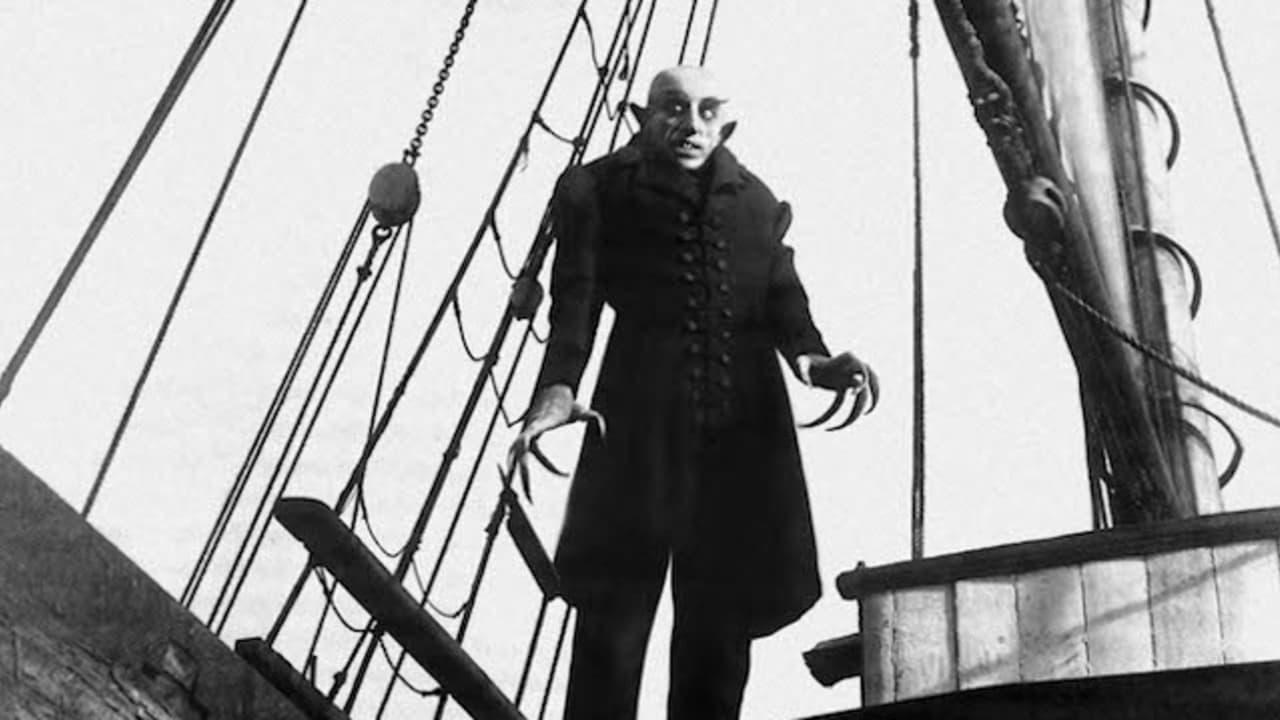
A contagion, not a seduction. Murnau puts real hills and a real ship around a figure that should not be walking and lets the landscape catch it. The shadow on the stairs belongs to no one you can see. The rats do the rest.
9. Häxan
SilentA lecture with a Sabbath in it. Christensen reads the Malleus Maleficarum, stages the torture and the flying, and then ends in a clinic to say the witches were patients. He plays the Devil himself. Variety called it unfit. It opened anyway.
Shadows that do not belong to anyone, literally. A traveling shadow-player pulls the guests' shadows off their bodies and stages their evening on the wall. No story titles in the first release. The uncanny as a projector trick, which is to say, as cinema.
The horror is a pair of hands. Wiene keeps the rooms ordinary and puts the Expressionism in Veidt's fingers: a pianist who believes the grafts remember a murderer. Watch him hold them away from his body. Nothing supernatural happens, and that is the point.
Three wax figures, three registers, and the Ripper episode is the one that matters here: a few minutes of double exposures, a fairground that tilts, a chase with no floor. Leni packed the method and took it to Universal. The next two films are what he did with it.
A ruined face under a mask. Chaney built it from wire and cotton and held still while Christine pulled the mask off. The Bal Masqué is Technicolor: the Red Death on the stairs at a party that cannot tell costume from warning. The unmasking is why the film exists.
Mephisto as a plague. Jannings spreads his cloak over a town in the opening, a model and a fan and smoke, and the horror is the scale. Then the flight over the model landscape. The bargain is the plot. Gretchen in the snow is the price.
A reflection sold, and the double walks Prague on its own. Krampf's split-screen lets Veidt fence himself. Galeen wrote Nosferatu and Waxworks and knew the uncanny works best in a familiar face. The mirror is a contract. The student signs.
16. The Magician
SilentMaugham's Crowley sketch, played by the Golem. Wegener as Haddo, a hypnotist who needs a virgin's blood, and Ingram shooting France and a tower with Seitz. The laboratory is the last act. The ritual is filmed as if it might work.
Leni brings the German hallway to Hollywood and invents the old dark house. A will, heirs in a river mansion, a claw through a wall, curtains that move. The uncanny as architecture. Every haunted-house comedy after it is standing in these corridors.
A face carved into a grin, and an actor who has to work through it. Veidt's mouth is wire and greasepaint, and the eyes above it are the performance. Leni plays England as a German set. Hugo's cruelty on a Universal lot, and the eyes doing what the mouth cannot.
Sounds wrong on purpose, looks half developed on purpose. Maté shoots through gauze; shadows go where they like; the doctor serves something you never see. The burial from inside the coffin, glass and sky, is the sequence. Not Expressionism. A dream with a Danish director.
The living dead as labor. Lugosi's Legendre runs a sugar mill with corpses, and the horror is the grinding stones, not appetite. Shot fast on sets left from Dracula. The colonial fact is inside the chiller, and the film half knows it.