Loading
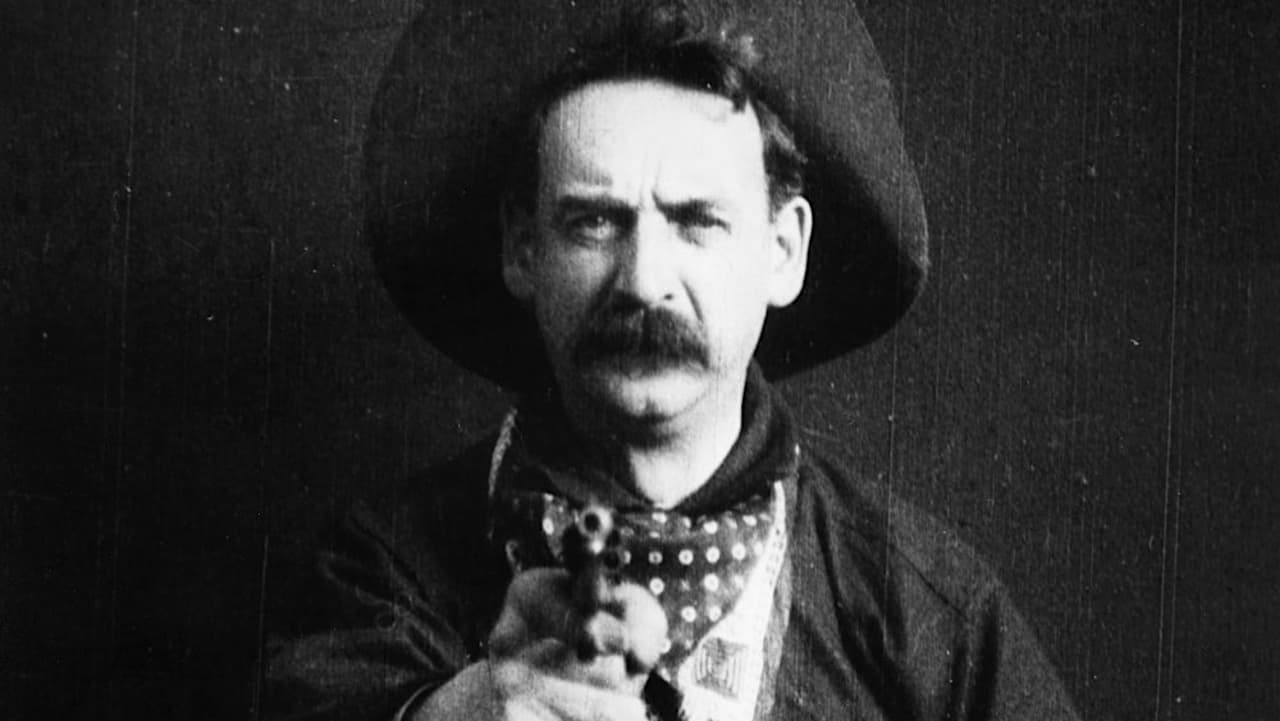
Edwin S. Porter, Edison, November 1903, New Jersey locations and a New York studio. Masked men stop a train, empty the mail car, force passengers into a line, and ride off; a telegraph operator, bound, is freed by his daughter, and a posse follows. Fourteen scenes, 740 feet. Edison's leaflet says the close-up of Justus D. Barnes firing at the camera may open or close the reel, as the operator chooses. Some prints hand-tinted the gun smoke. Added to the National Film Registry in 1990.
In three programmes
The camera is a witness that can be in two places. Porter cuts from the bandits to the telegraph office and back, and the story lives in the gap. Barnes firing at the audience was sold as an option: open with it or close with it, the operator's choice.
The job: cut. Porter leaves the bandits, goes to the telegraph office, and comes back, and the audience carries the story across the gap. Barnes firing at the lens could open or close the reel. Either way, it is the first time the film knows you are there.
The usual starting point and not the first Western. Fourteen scenes, real New Jersey woods, a posse on real horses, and Barnes firing at the lens as an opener or a closer, the operator's choice. Watch the land in the chase. The genre's grammar is mostly settled by the time the reel ends.
Cast & crew
Further reading
Also streaming
Loading films