The Arrival of Sound
Between 1927 and the early 1930s, cinema broke in half. The arrival of synchronized sound didn't just add a new dimension to movies. It threatened to destroy everything the medium had learned to do. Twenty-five years of visual storytelling, of cameras that could go anywhere and edits that could mean anything, suddenly collapsed into actors standing stiff in front of hidden microphones, reciting dialogue in stage-bound rooms. The earliest talkies were, for the most part, terrible: stilted, immobile, theatrical in the worst sense. But from that wreckage, a generation of filmmakers who had mastered the silent art began asking a question that would reshape cinema entirely: what should sound actually do? The films in this collection represent the most radical answers. Some directors refused sound outright. Others wielded it as a psychological weapon, a musical instrument, an industrial symphony, or a tool for building dread. What unites them is the understanding that sound's power lay not in faithfully reproducing reality, but in finding new ways to transform it. The relationship between what you see and what you hear could be as expressive, as carefully composed, and as deliberately wrong as anything the silent cinema had achieved with light and shadow alone.
11 films
From the Reading Room
A Cottage on Dartmoor
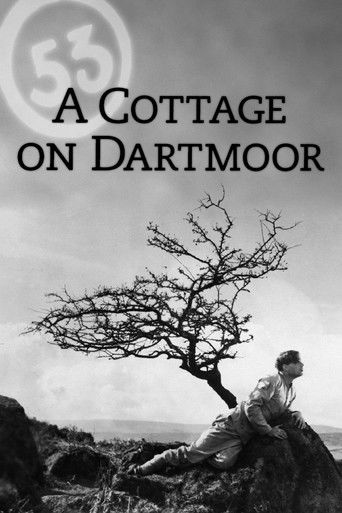
1929 · Anthony Asquith
Asquith's film arrives at the exact fault line between silence and sound, and it knows it. The story itself is a dark romantic triangle, but the film's most remarkable sequence takes place in a cinema, where the audience watches a talkie. Asquith cuts between the screen, the rapt faces of the crowd, and the lonely figure of a man for whom the new technology changes nothing. It's a silent film that contains a scene about the death of silent film, and the effect is uncanny, as though the medium is watching its own funeral. Beyond this meta-commentary, the film is a virtuoso display of everything silent cinema could do at its peak: fluid camera movement, expressive editing, visual storytelling so precise that dialogue would only slow it down. Asquith made the case for silence not through refusal but through demonstration.
Blackmail
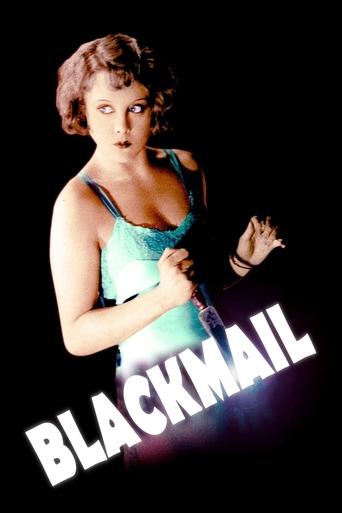
1929 · Alfred Hitchcock
Britain's first talkie was never supposed to be one. Hitchcock shot Blackmail as a silent film, then went back and reshot key scenes with dialogue when the studio demanded sound. The result is a film at war with itself in the most productive way possible. The famous breakfast scene, where the word "knife" cuts through the ambient conversation with increasing intensity until it's the only word the heroine (and the audience) can hear, isn't just a technical trick. It's the announcement of an entire aesthetic: sound as subjective experience, filtered through a character's psychological state rather than faithfully recording the world. Hitchcock understood immediately that what mattered wasn't what characters said, but how the audience heard it. The rest of his career would prove him right.
Applause
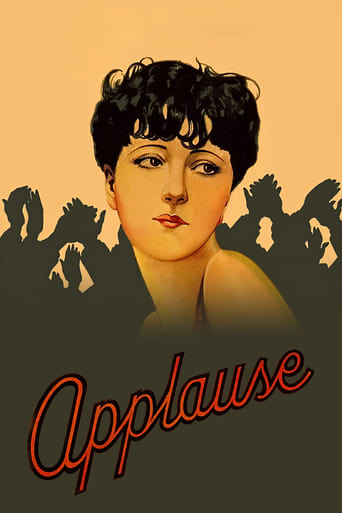
1929 · Rouben Mamoulian
While most directors in 1929 were locking their cameras inside soundproof booths and letting actors talk at each other from fixed positions, Mamoulian, a theater director with zero film experience, simply refused. He put the camera on wheels, shot on location in New York burlesque houses and Penn Station, and when his sound engineers told him it was impossible to record two voices at different volumes in the same scene, he told them to use two microphones on two separate channels and mix them later. They said it had never been done. He said do it anyway. The result is the first sound film that actually moves, that treats the camera as a living presence rather than a court stenographer. Applause is rough around the edges, and its melodrama about an aging burlesque queen hasn't aged gracefully in every respect. But what Mamoulian proved here, that sound cinema didn't have to mean static cinema, saved the art form from a dead end it was rapidly approaching.
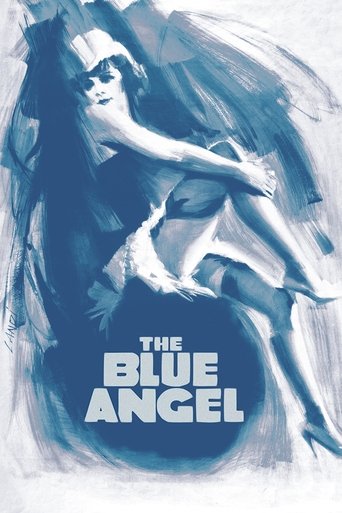
The Blue Angel
1930 · Josef von Sternberg
The first major German-language talkie is a film about destruction by sound. Emil Jannings plays a respected professor whose ordered, silent world disintegrates the moment he hears Marlene Dietrich sing "Falling in Love Again" in a dockside cabaret. Von Sternberg stages the collision with devastating precision: the professor's scenes are hushed, formal, composed; the cabaret is chaos, all music and laughter and clinking glasses and voices overlapping. Sound isn't just atmosphere here; it's the agent of ruin. As the professor descends from dignity to humiliation, the film's soundscape swallows him whole. Dietrich's voice, lazy, indifferent, magnetic, becomes the sound of a world that doesn't care what it destroys. Von Sternberg, who had built his silent career on the interplay of light and shadow, simply added a third element: the voice as weapon.
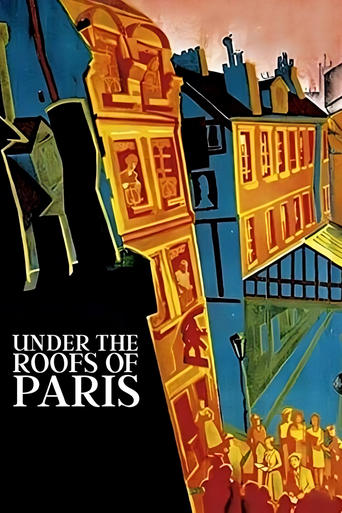
Under the Roofs of Paris
1930 · René Clair
Clair was openly contemptuous of the talkies. He saw synchronized dialogue as a regression, cinema chaining itself to theater just when it had learned to fly. But rather than refuse sound entirely, he found a way to subvert it. Under the Roofs of Paris uses music, ambient noise, and the sounds of the city lavishly, but it treats dialogue almost as an afterthought. Conversations happen behind closed doors or are drowned out by street noise, and the story remains perfectly legible without hearing a word anyone says. Clair's camera floats over Parisian rooftops, glides through streets, and choreographs its scenes to rhythm rather than speech. The effect is a film that feels like a musical even when nobody is singing, with sound used as texture and pattern rather than information delivery. It's the most elegant argument anyone made that sound cinema could remain a visual art.
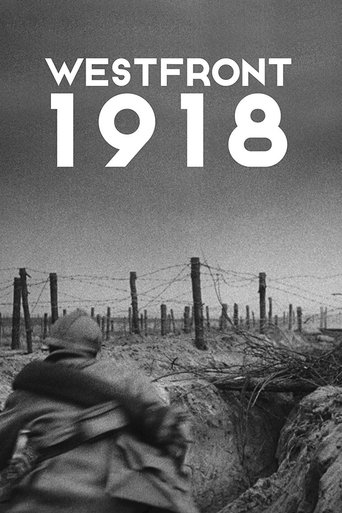
Westfront 1918
1930 · G.W. Pabst
Released the same year as All Quiet on the Western Front but largely overshadowed by it, Pabst's World War I film is in some ways the more radical work, and sound is the reason. Where Hollywood used sound to amplify spectacle, Pabst used it for annihilation. The battlefield sequences are built from overlapping layers of screaming, artillery, collapsing earth, and the terrible mechanical grinding of a war that has become industrialized slaughter. But Pabst's real innovation is silence: the moments when the noise stops and a wounded soldier lies alone, breathing, waiting. The contrast is unbearable. Pabst had spent the silent era as one of cinema's great realists; with sound, he gained access to a realism that images alone couldn't achieve. The audience doesn't just see the war. They're trapped inside it.
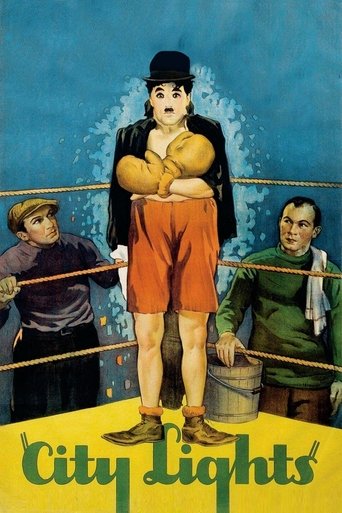
City Lights
1931 · Charlie Chaplin
Four years after The Jazz Singer, the most famous filmmaker in the world released a silent film. It was an act of defiance that could have ended his career, and instead it produced his masterpiece. City Lights has a synchronized orchestral score and sound effects, but no dialogue. Its opening scene is a direct satire of the talkies: a politician gives a speech, but all that comes out are squeaking, garbled noises, the human voice rendered literally unintelligible. From there, Chaplin proceeds to demonstrate that everything sound was supposed to add to cinema, he could already do without it. The Tramp's romance with a blind flower girl communicates more through gesture, timing, and the precise choreography of bodies in space than any dialogue scene of the era. The final shot, her face as she recognizes him, is silent cinema's last and greatest argument for itself. Chaplin wasn't wrong that something was being lost. He just couldn't stop what was coming.
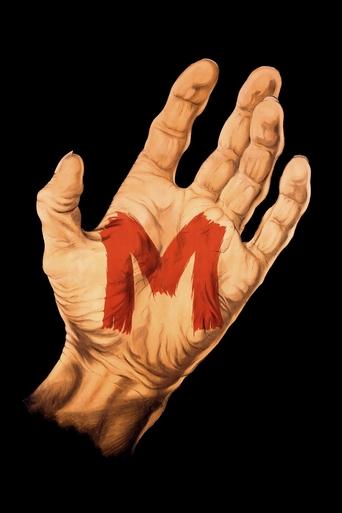
M
1931 · Fritz Lang
If any single film proved what sound cinema could become, it's this one. Lang's serial killer procedural is built almost entirely around the relationship between sound and silence, and the gap between them. The murderer is identified not by his face but by his whistle: a few bars of Grieg's In the Hall of the Mountain King, heard before he's ever seen. The city's soundscape, all traffic and crowds and newspaper vendors, creates a constant nervous hum that goes quiet only when something terrible is about to happen. Lang uses sound the way he had always used shadow: to create meaning through absence. When the blind balloon seller recognizes the whistle, the audience has already been trained to hear it as a death sentence. There is almost no musical score. Every sound is diegetic, rooted in the world of the film, which makes the silence when it comes feel like the air being sucked out of a room. M didn't just use sound well. It established a grammar for how sound and image could work together that cinema is still drawing on.
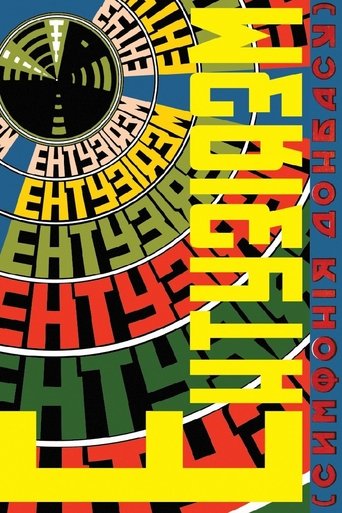
Enthusiasm. Symphony of Donbas
1930 · Dziga Vertov
Vertov had spent the silent era building a radical philosophy of cinema, what he called the "Kino-Eye": a camera-truth that rejected scripts, actors, and narrative in favor of capturing life as it was actually lived. When sound arrived, he did exactly what you'd expect and exactly what nobody else was doing. He took his recording equipment into the coal mines and steel mills of the Ukrainian Donbass and turned industrial noise into music. Enthusiasm is not a film with a soundtrack attached. It's a composition in which machinery, sirens, crowd noise, and fragments of speech are arranged with the same formal rigor a composer would bring to an orchestra. Vertov was doing musique concrète two decades before the term existed. Chaplin reportedly called it one of the most thrilling sound experiments he had ever encountered, which is high praise from a man who had just spent two years refusing to let characters in his own films speak. The result is raw, chaotic, and at times overwhelming, but it remains the most uncompromising answer anyone gave to the question of what sound cinema could be when freed from the tyranny of the human voice.
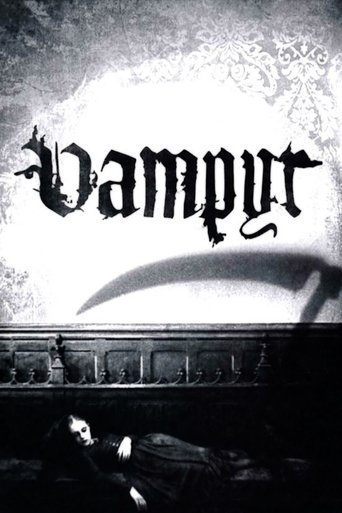
Vampyr
1932 · Carl Theodor Dreyer
Dreyer's horror film sounds wrong, and that's the point. Voices drift in from somewhere offscreen, disconnected from the mouths that might be producing them. Ambient sounds feel slightly too present or too distant, as though heard through water or a wall. The effect is a soundscape that mirrors the film's hazy, dreamlike images: nothing is anchored, nothing is reliable, nothing quite belongs to the world as we know it. Dreyer shot Vampyr in three languages simultaneously (German, French, English) with non-professional actors, and the resulting performances have a detached, somnambulant quality that the dislocated sound design amplifies into genuine unease. Where Lang used sound to create precision, a whistle that means death, Dreyer used it to dissolve certainty. The film asks: if you can't trust what you're seeing, why should you trust what you're hearing? It remains one of cinema's great demonstrations that sound, like the image, can lie.
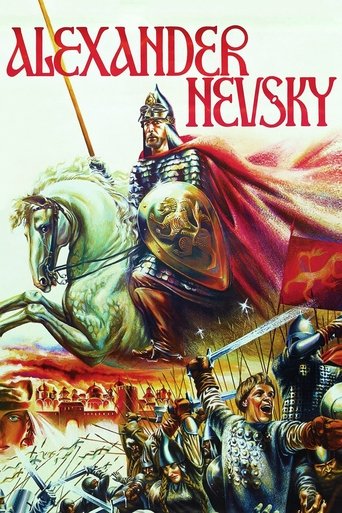
Alexander Nevsky
1938 · Sergei Eisenstein, Dmitriy Vasilev
Eisenstein had spent the late 1920s theorizing about sound before he ever used it, publishing manifestos arguing that synchronized sound (dialogue matching lip movements, music underlining emotion) was a creative dead end. What he proposed instead was "audiovisual counterpoint": sound and image working against each other, creating meaning through collision the way his montage theory created meaning through the collision of shots. Alexander Nevsky, his patriotic epic about a medieval Russian prince repelling Teutonic invaders, was his chance to prove it. Working with Sergei Prokofiev, Eisenstein didn't just add a score to finished images. The two of them built sequences together, sometimes cutting the film to match composed music, sometimes composing music to match edited film. The result, particularly in the legendary Battle on the Ice, is a fusion of sound and image so tight that neither element makes full sense without the other. It's not illustration. It's not accompaniment. It's cinema as a composed audiovisual experience, every frame and every note placed with the same deliberation.